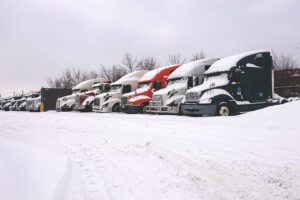
We welcome all professional Truck Drivers and Owner Operators to our Truckstop Community
It does not matter if you are driving OTR or local Truck deliveries, Trustop Canada is your Home Online. Truckstop Canada's Forum provides a place where Truck Drivers can come in for information or discuss Trucking News, Truck Photos, Trucker Classifieds, Trucker Jokes, Trucking related questions or have a Trucker Live Chat with other Truck Driver Members. We would be honored to welcome you as a Member in our professional Trucker Forum.
I applaud the green attitude of those people who ride a limited speed
motorcycle (LSM) for their trips on BC highways. Surely their carbon
footprint is a lot lighter than my own. That and their wallet will be
heavier as these motorcycles are economical to buy, license and operate.
I also cringe when I see them on higher speed highways traveling at 70
km/h or less. Will they be at significant risk riding among other
traffic moving at 90 km/h and faster? Drivers today seldom have patience
for anyone driving at the speed limit much less those driving more
slowly.
Some LSM riders appear to have decided that they should drive on the
shoulder of the highway rather than in the lanes with the rest of the
traffic. This practice may feel safer for them but it is not legal. They
must take a position in the lane as any other motorcycle rider would.
What is the difference between an LSM and an electric bicycle? They
sometimes look much the same but the electric bicycle is required to be
used as nearly as is practical to the right edge of the highway, which
includes the shoulder. They also travel significantly slower, having a
maximum speed of 32 km/h on level ground.
It’s not exactly a rebound, but jobs are trickling back into London and area automotive parts plants.
Accuride in London, which makes wheels, got some relief after years
of dwindling jobs, with a recent callback of 40 laid-off workers,
boosting its total staff to about 130.
The plant employed about 500 four years ago, but the recall is still a
sign of some good news, said Tim Carrie, president of the Canadian Auto
Workers Local 27, which represents workers at many parts plants in the
region.
“It is a good sign. It is good news when a company that supplies the
trucking industry recalls workers — that is positive,” said Carrie.
The trucking sector is considered an indicator of economic fortunes:
When it does well, it’s a sign the economy is rebounding since consumers
are buying goods that need to be shipped.
“It is coming back in dribs and drabs,” said Carrie.
Ceva Logistics is also hiring. It carries goods for defence industry
manufacturer General Dynamics Land Systems Canada, which has a large
London operation.
Ceva have a job fair Aug. 5 from 10 a.m. to noon and 5 to 8 p.m., at
the Progress Building at Western Fair grounds. It is looking to add 30
jobs for clerical workers, warehouse, shipping and receiving staff and
forklift drivers.
The GM-owned Cami car assembly plant in Ingersoll is running at full
capacity to keep up with demand for its hot Equinox and Terrain
crossover utility vehicles.
It will add 100 jobs by summer’s end and another 100 by year-end,
after hiring 50 new workers in May. It has recalled all its laid-off
workers and added 170 workers laid off from other GM plants, including
from Oshawa.
Its suppliers are busy, too. One of those, Rieter Automotive, has
added about 40 jobs and is looking to add 60 more. It now employs about
180.
“I don’t think we will ever rebound to the level we were at, but this
is a good sign,” said Carrie. “I measure a rebound in workers getting
their jobs back, and that is happening now.”
Jim Reid, first vice-president of Local 27, said, “We are cautiously optimistic” about stability in the automotive sector.
“We are anticipating heavy truck will come back quite a bit, but with the U.S. economy still struggling, who knows for sure?”
Brose Automotive in London announced last month it’s adding 150 jobs as the plant undergoes a $20-million expansion.
Takumi Stamping in St. Thomas, supplier to the booming Woodstock Toyota plant, is adding up to 50 jobs.
The news is good in the wider region as well, according to recent CAW releases:
Martinrea in Ridgetown added 80 jobs, and now employs 240.
APPlasman and Woodbridge Foam in Tilbury and Ventra Manufacturing in Ridgetown are all back to full employment.
Meritor in Chatham has secured a new, $12-million investment and is back to full employment.
WINNIPEG -- Nearly 900 drivers in TransX’s fleet got a little recognition for their dedication to safety.
The
TransX Group of Companies hosted their 25th annual Safety Awards
banquets with events at nine different locations throughout Canada and
the U.S. The awards ranged from 1 - 32 years of accident free miles
driven, with nine new drivers joining the Million Mile Club and four
being added to the Two Million Mile Club.
"We are proud that
this is our 25th year of giving safety awards to our best,” said Louie
Tolaini, president of TransX. “This year we acknowledge 894 Drivers."
"The
safe operation of our trucks on the highways of North America is a
guiding principle used to operate the business. We are proud to
recognize the safest drivers in our fleet." added Ron Joseph, the newly
appointed president of TransX USA.
Ambassador Bridge Moves Forward in Approval Process
The current
Ambassador Bridge, which is 80 years old, is the busiest border crossing
in North America, handling 1.6 million truck crossings each year.
Manuel Moroun, owner of the Ambassador Bridge, is one step closer to
building a second span of the international crossing between Michigan
and Windsor, Ontario. Moroun received the OK from the Canada Border
Services Agency to build a new customs plaza in Windsor, according to reports by The Globe and Mail.
The next step to building the private bridge is to submit an
environmental impact statement to Transport Canada for review. While the
statement was prepared in December 2007, the Canadian government wanted
approval from the Canada Border Services Agency before reviewing the
report.
In an interview with The Globe and Mail, Matthew Moroun, Moroun's
son, said they hope to have the environmental impact report reviewed
this year, but he expects there to be bureaucratic obstacles.
"I'm sure Transport Canada is trying to figure out what banana peel to
throw into the mix," Moroun told the publication. "I'm not a babe in the
woods, and I know Transport Canada is going to tap dance and do
whatever they can to delay our environmental case until next year, but
the ball is squarely in their court."
But James Kusie, spokesman for Transport Minister John Baird, told the
publication that Transport Canada is waiting to receive additional
information from the Ambassador Bridge Co. before the proposal is
reviewed. "Despite several requests, the Ambassador Bridge Co. has not
yet submitted the necessary information to Transport Canada so that the
department can undertake the review of its environmental assessment
submission," he said.
Kusie also said the Canadian government prefers the Detroit River
International Crossing project, another bridge span that would be
publicly-owned. "We believe it is in the public interest to construct a
new Detroit River crossing that is subject to appropriate public
oversight," he told the Wall Street Journal.
However, the DRIC project is wrapped in politics of its own. Lately,
proponents of the project are trying to get public-private partnership
legislation that would permit the Michigan Department of Transportation
to enter into a relationship with Canada and a private sector
transportation project developer/financier.
The American Trucking Associations will hold its National Truck Driving
Championships next week, from Aug. 3 to 7 at the Greater Columbus
Convention Center in Columbus, Ohio.
During the event, 400 top professional truck drivers from all across the
U.S. will compete in the what's considered the "Super Bowl of Safety."
The contestants are state champions (in eight competing classes with an
affiliated competition for step vans) from all 50 states. They have
driven over a half billion accident-free miles in earning the right to
compete in the NTDC.
Drivers will compete for four days, challenging their driving skills,
and knowledge of safety, equipment and the industry. The tests typically
include obstacles like an alley dock, a rear line stop, a side park, a
scales stop, a turn, a front line stop, and straight line driving
through a diminishing clearance.
The National Grand Champion Truck Driver will be announced on Aug. 7,
along with individual champions in each truck class. The state team with
the highest score will also be honored.
Volvo says its newest trucks will put fewer harmful pollutants into the air than the Internationals being made by Navistar.
It’s the latest in the ongoing battle between the big truck companies over whose emission-reduction system is the best.
Navistar went with an exhaust gas recirculation or EGR system
that’s designed to burn up harmful gases in the engine. Its competitors
– including Volvo, Daimler and Paccar – went with selective catalytic
reduction or SCR technology, which treats the gases in the exhaust
system by adding urea.
Navistar recently urged federal and state officials to re-examine
SCR, charging that truck owners could skip adding the urea and the
truck would still run just as well.
– By Reed Black, staff reporter Courtesy of LandLine Magazine
Headlights on passenger vehicles manufactured in Canada before 1990 do not turn on automatically when the vehicle is in motion.
Most
professional drivers in the '70s and '80s, however, turned their
headlights on manually for safety reasons. Not only did oncoming cars
recognize these professionals first, but also thought the approaching
professional drivers were closer than they really were. This first
recognition and greater attention to the headlights during daylight
hours resulted in fewer crashes involving these drivers.
In some
jurisdictions, where headlights were used during the day, crash rates
for such vehicle operators were reduced by as much as 50 per cent. More
and more drivers caught on to this simple way of getting noticed and the
federal government mandated the behaviour in the 1990 vehicle models.
Today, an overwhelming number of vehicles on our roads have running
lights operational when in motion. It is rare to see a vehicle without
headlights on during the day.
Drivers who do not have their
headlights turned on while driving, are at greater risk of a crash.
There is a simple reason for this. We are more likely, as vehicle
operators, to be aware of a light source than not. In fact, We pay so
much attention to the light source that we often overlook oncoming
vehicles which are not using headlights to warn us of their presence or
relative proximity.
Many older vehicles are driven by younger,
less experienced drivers anf these older vehicles are often not as well
maintained. (This is not always the case. Many owners of older vehicles
are proud of their cars and trucks and do take meticulous care of them
but they are, sadly, in the minority.)
Pedestrians will often take
a chance and cross a street when an approaching vehicle does not have
running daytime lights. These vehicles will seem further away than the
vehicles with full daytime running lights. Drivers crossing an
intersection will often look for a headlight source during the day and
may simply fail to see other traffic.
It is highly recommended that all pre-1990 vehicle drivers turn their lights on at all driving times.
The
tail lights on most vehicles do not come on automatically when in
motion but some European manufacturers are including this feature.
It
is a good idea to put the parking lights on when driving on the
highway. This is a good way of drawing attention to your car or truck.
Following traffic will see you first on multi-lane freeways and highways
and generally pay more attention to you, often allowing more space.
Many
newer cars and trucks have sensors that will turn the headlights to the
"on "position when it begins to get dark and to the "off" position when
the sun rises again.
High beams should be used when a driver
feels it is necessary to see much further down the road at night. They
should never be used during the clear light of day. Always dim your
lights for approaching traffic. A simple flash of the high beams may be
needed to remind oncoming traffic to dim the lights but never keep the
high beams on to teach the oncoming offender a lesson. Blinding an
oncoming driver is not a good idea.
Drunk drivers are often drawn
to a light source. It is best to look at the right shoulder of the road,
in order to gain a sense of lane position, when facing oncoming high
beams.
There are strict guidelines that govern headlight
brightness. Newer bright blue and ultrawhite headlights fall under this
regulation. When using bright lights remember courtesy is contagious.
Steve Wallace is a longtime teacher and owner of the Wallace Diving School in Victoria
Port Metro Vancouver Raises the Bar on Air Quality
Port Metro Vancouver has raised the
bar when it comes to lowering air emissions in the key areas the
Northwest Ports Clean Air Strategy 2009 Implementation Report has laid
out, including rail, cargo handling equipment, ocean going vessels, port
administration, harbour craft and trucks. Emissions reduction targets
in the 2009 report set a common goal, but Port Metro Vancouver's efforts
to protect the air shed have exceeded expectations.
Port Metro Vancouver emissions
reduction programs have received international acclaim, having been
awarded the Globe 2010 ecoFreight Award for Sustainable Transportation.
The Port has also been credited for its Air Action Program, having been
nominated for the International Sustainable Shipping Award.
"Port Metro Vancouver has received
international recognition for the forward thinking sustainability
initiatives we have underway, thanks in large part to the support of our
terminal operators and industry partners, like those in rail and
trucking," said Robin Silvester, Port Metro Vancouver
President and Chief Executive Officer, "By working together, we have
seen significant improvement in ongoing emissions reduction efforts and
as a direct result, the Port is well ahead of the curve when it comes to
lowering our carbon footprint," he said.
The Northwest Ports Clean Air Strategy 2009 Implementation Report
outlines progress by the Port and its regional partners, the ports of Seattle
and Tacoma, to meet jointly established short- and long-term clean air
goals for ships, cargo-handling equipment, rail, trucks and harbour
craft.
"I'm very pleased that Port Metro Vancouver
has made good progress in a number of sectors, and emerged as a
regional leader in air emissions standards and results for truck
emissions and Port administration," said Darrell Desjardin, Director of Environmental Services, Port Metro Vancouver,
"There is always more that can be done, but we have set the bar high,
and will continually work to reduce air emissions across all of the
sectors," he said.
SAINT JOHN, N.B. -- John E. Irving, a man
described by former New Brunswick premier Richard Hatfield as a
“gentleman with a gentle soul" -- and perhaps the only Canadian tycoon
to ever get kidnapped -- died Wednesday at 78.
Irving, who went
as Jack, was known as the quiet one of three Irving brothers who grew
the J.C. Irving empire from a small family business into an oil,
forestry and transportation enterprise that sprawled the globe. His
brothers are J.K. and Arthur Irving.
Within the trucking industry, the Irvings are probably most associated with carriers Midland, Sunbury and RST.
However,
Irving also owns Irving Oil, marine and rail interests as well as a
vast array of manufacturing and raw-materials processing operations.
(Jack was mostly responsible for the family construction, engineering and steel fabrication operations.)
Born
in 1932, Irving made front pages across Canada in 1982 when he was
taken hostage by a gunman demanding $50,000. He was held for 10 hours
before being released and the kidnapper charged.
One biographer called the incident a “brush with mortality” that contributed to Jack’s genteel persona.
Irving
passed away after a brief illness and is survived by his wife, three
children and six grandchildren. Tributes have poured in from around the
globe.
His passing coincides with another dramatic loss for the
company. Just hours before the family announced Irving’s death, they
also stated that his nephew, Kevin Irving, the CEO at Irving Oil, was
taking health-related leave of absence of indeterminate length.
The loss of the two leaders leaves a major gap in the upper echelons of the $4-billion enterprise.
The Volvo Group posted strong second quarter figures on increased truck
sales and an improving market environment. The company reported a net
income of $430 million, up from a loss of $757.6 million in the year-ago
quarter.
Net sales were up 27 percent to about $9.4 billion, compared to about $7.3 billion in the 2009 quarter.
New truck orders were up 82 percent from the year-ago period to 48,418
units worldwide, compared to 26,624 units. Truck sales were up 24
percent to 41,589 units from 33,527 units a year earlier.
"In North America, we continue to receive very good response from
customers to the Group's trucks that are equipped with engines that
fulfill the new emissions requirements, EPA 2010, that were implemented
at the beginning of the year," said Volvo CEO Leif Johansson. "The
trucks are a significant step forward for the environment, with nearly
zero emissions of nitrogen oxides and particulates, while reducing fuel
consumption by up to 5 percent. To date, we have received orders for
more than 10,000 of the new trucks."
The company also made the decision to start production of the group's new medium-duty engine range in India.
"The investment will provide the Group with cost-efficient medium-sized
engines for the Asian market as well as sophisticated engines that
fulfill tough emission regulations like Euro VI," Johansson said.
Marine Atlantic says protesters could be banned from the ferry for some time.(CBC)
Small trucking companies remain locked in a battle with Marine Atlantic over the ferry booking system.
Frustrated truckers are threatening to stage protests at the ferry
terminals in North Sydney in Nova Scotia and Port aux Basques, in
southwestern Newfoundland, which could disrupt ferry service in the
Cabot Strait.
They say the new reservation system is resulting in long waits, and that's putting them out of business.
"If Marine Atlantic keeps taking food from our table, we got no other
choice. We have to do something," said Chris Howlett, with Akita
Equipment, based in Mount Pearl, N.L.
But the Crown corporation has a threat of its own.
Marine Atlantic CEO Wayne Follett sent an email Friday warning
truckers that any interruption of service won't be tolerated. He said
protesters could be refused service for a period of time.
Tara Laing, spokeswoman for Marine Atlantic, isn't saying much more.
"We've informed people that if there's a disruption in service we
would take that very seriously and ask for authorities' help," she said.
Truckers used to board the ferry on a first-come, first-served basis. Since March, they have had to book ahead.
While Marine Atlantic says the new system means fewer and shorter
lineups, small trucking companies complain they can't get a reservation
because bigger companies are block-booking ahead and cancelling at the
last minute.
Howlett said one of his trucks arrived in North Sydney from Ontario on Tuesday, but he couldn't get on the ferry until Aug. 20.
Marine Atlantic 'not fair'
He said Marine Atlantic's email crossed the line.
"It's a federal government agency and, again, we live in a democracy.
It's pretty simple. No, it's not fair and I think someone should be
doing something about it," Howlett said.
Since the reservation system has been in place, he said, his business has dropped $150,000 from the same period last year.
Dennis Porter, with Porter's Trucking in St. John's, said he supports
a protest. He runs fresh produce and fish on eight trucks across
Eastern Canada and the eastern U.S. If his cargo isn't delivered on
time, it's worthless.
"If we can disrupt the service, maybe if this went national, maybe we
could get some attention," he said. "We're going into five months here
now. Honestly, truthfully, I won't be around in five more months."
Howlett said truckers are consulting with a lawyer.
Laing said these are the three busiest weeks of the year and there
are always delays at this time. She said two new larger ferries will be
in service next summer.
A Newfoundland and Labrador businessman is leasing a barge to move goods from southern Ontario to eastern Newfoundland. (CBC)
A private initiative to ship goods to eastern Newfoundland from central Canada can't start quickly enough, a local trucker said.
Greer Hunt, a Mount Pearl-based trucking company owner, is leasing a
barge for the next three years to ensure speedier shipment of goods from
central Canada.
Chris Howlett, who owns Akita Equipment and Auto Transport, is applauding the move.
"I'm sure he's not looking to go into competition with ... Marine
Atlantic," said Howlett. "But maybe some day someone will, and then
we'll see what we've got for a ferry system."
Like Hunt, Howlett has has problems with the reliability of Marine
Atlantic's commercial reservations system and with chronic waits and
delays.
Howlett tried to land a spot on Greer's barge immediately, to no avail.
"He was booked up for this week's sailing but hopefully in the future
maybe sometime I might be able to secure some space," said Howlett,
whose company is also based in Mount Pearl.
Howlett said Hunt is sending a strong message about the quality of service that truckers require.
Marine Atlantic declined a formal interview, although an official said the corporation wishes Hunt well.
The barge can move about 50 trailers at a time, and will ship goods
from Hamilton, Ont., to a dock in the Long Pond area of Conception Bay
South.
Model 15 White fuel tanker truck Bob English for The Globe and Mail
Collector still drives vintage 1919 tanker ‘to visit the grandchildren’
When Hank Doornekamp’s Model 15 White
fuel tanker truck was built in 1919, the number of vehicles on the still
mainly dirt roads of North America had grown from less than 5,000 at
the turn of the century to more than nine million, virtually all of them
powered by gasoline.
In the motoring age’s early days, the affluent few who could afford cars
purchased gasoline from fuel company depots and then in cans or from
hand-operated pumps installed by entrepreneurial general store owners.
Dedicated “gas stations” began to appear by about 1910 as oil companies
started to create distinct brand identities for their products. Tankers
like the White, with its capacity of about 600 or so gallons (2,300
litres) and side compartments to hold motor oil and other products,
would have spent their days making deliveries to these newfangled city
stations, with their increasingly imaginative, Greek temple, Chinese
Pagoda and Swiss chalet themed eye-catching architecture. Or perhaps
running rural routes to those mom and pop operations, their limited
capacity and speed easily meeting the public consumption needs of the
day.
The modern tankers we share highway space with today have the capacity
to haul 30,000 litres or more to meet the volume demands of the 20
million vehicles now on Canada’s highways and approximately 250 million
on U.S. roads, which now consume some 400 million U.S. gallons
(1.514-billion litres) of fuel a day – more than a gallon (four litres)
for each and every one of us.
While growing up in Oshawa, Doornekamp lived near a White Rose gas
station, which obviously struck a chord, as he not only collects White
Rose service station memorabilia but his tanker is dressed in the livery
of Canadian Oil Companies Ltd. The firm was the Canadian subsidiary of
U.S.-based ENARCO (the National Refining Company of Cleveland) whose
newly created automotive brands included Black Beauty axle grease and
White Rose gasoline.
Born in Holland, Doornekamp came to Canada in the early 1950s with
family. His father was a stonemason/bricklayer and Doornekamp also
learned the masonry trade, which paid for his civil engineering degree
at Queens. After working for a couple of Toronto construction companies,
he launched his own general contracting company, H.R. Doornekamp
Construction Ltd., in Odessa, Ont., near Kingston.
His interest in cars and particularly trucks “began in the sandbox” and he graduated to a 1929 Chevrolet – rather than the Honda
motorcycle he wanted but his father didn’t think was such a good idea –
at 14, tinkering with it and later driving it to high school. He still
owns it today.
His first old truck was a 1951 GMC single-axle long-nose highway tractor
purchased in the late 1970s but then sold to finance another vehicle
for his expanding company. He reacquired it a decade later but the
project languished until a visit to a fellow construction firm owner’s
extensive collection of trucks “motivated me to get going.”
The GMC was fully restored and since then he’s says he’s “never looked
back” – now owning some 30 trucks, cars, tractors and pieces of
equipment in original condition, restored or in the works.
He’s also acquired an extensive collection of paraphernalia – pumps,
signs, etc. – related to the automobile from the 1920s to the 1960s,
much of it related to the White Rose brand. And he has plans to turn his
home-based workshop into a replica of an early White Rose gas station.
The 1919 three-quarter-ton Model 15 White was purchased 15 years ago in
the U.S., an older restoration he has since taken completely apart and
rebuilt to a much higher state of detail, including the addition of the
side boxes.
White was a sewing machine manufacturer, whose founder Thomas White
purchased a steam-powered Locomobile in 1898. Its drawbacks resulted in
his sons developing a better steam power system which was employed in a
series of successful White automobiles and later trucks and buses. But
steam car sales had vaporized by the early 1920s and White stuck to
trucks in the decades ahead. The company eventually ran out of steam
again in 1980, and Volvo stepped in to buy its U.S. assets, later
dropping the White name, while two Canadian companies acquired its
Western Star brand operations here, which later merged with
Freightliner.
The 1919 is powered by a big flathead four, mated to a four-speed
transmission both built by White, which made virtually all its own
parts. It’s started with a hefty yank on a starting handle crank,
followed by a dash back to the open-sided cab to twiddle the choke,
throttle and spark levers.
It usually fires up easily and, after it’s warmed up, “idles smoothly
and quietly at what seems like about 10 revs per minute. You almost have
to lean against it to know that it’s going.” Two oil sight glasses on
the dash let the driver make sure oil is being delivered to the working
parts.
And Doornekamp says it’s surprising how fast it is for a working vehicle
of its vintage. “I can get this baby up to 40 mph. But you’re doing a
whole lot of wiggling and wobbling when you do.” Solid axles and leaf
springs front and back are fitted with artillery wheels and beefy tires,
with brakes only at the back.
“It’s turned into a bad habit,” laughs Doornekamp of his collection. But
that’s just fine with him. He had realized in his 40s, after working
hard for many years, that he needed to enjoy life a little more. And
now, he says, his life after working hours revolves around his trucks,
reading about them, working on them in his shop, polishing them up on a
Sunday afternoon, attending events or just driving them.
“I don’t like competing. I’m not in it for trophies or prizes,” he says,
but shows give him an excuse to exercise his fleet. “And every weekend I
use one of the trucks to drive into the village to go to the hardware
store. Or to visit the grandchildren. They love it.”
And why shouldn’t they? What kind of kid wouldn’t think it neat to have a
grandfather who turns up in a yellow vintage tank truck, or a
bright-red highway tractor and flatbed trailer?
The Commercial Vehicle Safety Alliance is gearing up for the 18th annual
North American Inspectors Championship (NAIC) in Columbus, Ohio, on
Aug. 2-8.
CVSA stresses that the event is more than a competition; it's an
opportunity to get a snapshot of the current roadside inspection
environment, as well as a forum to evaluate both successes and areas for
improvement. In addition, the international event also develops future
leaders, strengthens the industry and enforcement partnerships, and
promotes camaraderie between inspectors, jurisdictions, and countries.
"Commercial vehicle inspectors have a huge responsibility in ensuring
that the large trucks and buses that travel down roads alongside
passenger vehicles are doing so safely by checking a vehicle's brakes,
tires, tiedowns, driver's record of duty status as well as other
critical items while conducting an inspection," said Buzzy France,
CVSA's president.
"FMCSA congratulates all of the dedicated and skilled commercial motor
vehicle inspectors competing this year in Columbus," said FMCSA
Administrator Anne Ferro. "It is only through their day in and day out
attention to detail that we set the bar high to meet our safety goals
and reduce deaths and injuries on our roadways."
This year there are six candidates from Canada, three from Mexico and 47
from the U.S. The theme of NAIC 2010 is 'Education, Performance,
Uniformity, and Partnerships.'
NAIC's purpose is to recognize the inspector for demonstrating inspector
excellence. NAIC contestants are evaluated in the following categories:
North American Standard Level I Inspection; North American Standard
Level I Inspection Procedures; North American Standard
HazMat/Transportation of Dangerous Goods Inspection; North American
Standard Cargo Tank/Other Bulk Packagings Inspection; North American
Standard Level V Passenger Vehicle (Motorcoach) Inspection; Personal
Interview; and North American Standard Out-of-Service Criteria Exam.
Trucker’s speed-limiter case extended to September
Canadian trucker Scott Mooney of Fergus, Ontario, continues to fight a speed-limiter infraction in provincial court.
Mooney was one of the first truck drivers to receive a citation
after the Ontario Ministry of Transportation began enforcing the
speed-limiter law in June 2009.
Mooney is fighting his ticket on the grounds that the law itself
creates an unsafe environment on the highways with vehicles traveling at
different speeds.
He had his day in court, or at least a partial day, on July 21 in
Napanee. The judge in the case set another date for Sept. 2 to complete
the testimony.
“At that time, we’ll be finishing up the last witness, the police officer, and we will do summations,” Mooney told Land Line Magazine on Monday, July 26.
“We will not be expecting a decision on that date,” Mooney said.
“The judge made it clear that there is a lot of information to review.”
– By David Tanner, associate editor Courtesy of LandLine Magazine
Trucker parked overnight in SC shot in robbery attempt
A 35-year-old South Carolina trucker suffered a gunshot wound during
an apparent attempted robbery early Wednesday morning, July 21.
It’s a case with similarities to the robbery and murder of truck
driver Jason Rivenburg. More than a year ago, Rivenburg was shot and
killed in the cab of his truck at an abandoned gas station in South
Carolina. He was planning to get some sleep before an early delivery
the next day and due to the lack of established truck parking, was
forced to park where the security was questionable.
According to The DillonHerald, police in
Dillon, SC – which is just off Interstate 95 near the North Carolina
border – say the trucker had pulled off onto a grassy lot Tuesday just
south of the downtown area to sleep and planned to make a delivery
nearby the following morning.
At 2 a.m. a man knocked on the cab door and asked for directions
to a motel. Two other men stood in the background. The man at the door
then fired a shot through the window. The bullet grazed the trucker’s
hand and then penetrated his shoulder.
According to the Herald, the assailants were described as three black males, one had dreadlocks.
– By Reed Black, staff reporter Courtesy of LandLine Magazine
Twenty years of traffic policing has left me wondering if today is the
day that another driver will involve me in a crash. I seem to be asking
myself this more and more often as I observe the behaviour of other
drivers around me. Driving is probably the largest risk that I take in
my life right now.
It occurred to me today that I have spent much of my time teaching
others about the traffic rules here in my column. This is good knowledge
to have as it will allow you to predict what other drivers will do as
long as they follow these rules. However, what protection does knowing
the rules provide when the other driver doesn't follow them?
I've probably mentioned defensive driving from time to time, but I don't
think that I have written about it in any depth. I should have, because
this provides the skills and knowledge necessary for your own self
preservation when you travel the highways of our province. A little time
invested learning here may pay big personal dividends one day.
It seems appropriate to finish by mentioning one of the five keys from
the Smith System of defensive driving taught to me during basic training
in Depot: Get the Big Picture! Fewer mistakes are made when you have
the complete traffic picture around your vehicle.
CARB fines 16 companies for diesel violations, distributes $100,000
The California Air Resources Board reached settlements last month with 16 companies that had violated state diesel regulations.
Violations included failure to:
Conduct smoke inspections on heavy-duty diesel vehicles;
Report diesel-powered cargo handling equipment;
Comply with trash truck regulations; and
Install certified emissions reduction equipment on diesel engines.
The fines totaled $114,350, of which $85,762 will be given to the
California Air Pollution Control Fund for projects and research to
improve the state’s air quality. The remaining $28,588 will go to fund
emissions education classes around the state.
“California has achieved cleaner skies largely through industry’s
compliance with state, federal and local air quality laws,” James
Ryden, CARB enforcement chief, said in an agency statement.
“Most companies follow the law; those that don’t are only making it harder for Californians to breathe clean air.”
– By Charlie Morasch, staff writer Courtesy of LandLine Magazine